
Do vitamin drinks work, and when are they worth it?

Sometimes. Fortified drinks can measurably improve blood levels of specific nutrients in people who are actually short on them, but for most healthy adults, the extra sugar and calories cancel out any real advantage.
A 16‑week trial found a daily B‑vitamin‑fortified drink raised serum B12, folate and B6 while lowering homocysteine in older adults, a genuine biomarker win. The catch: that result came from a targeted population with a documented gap, not from a can grabbed off a convenience store shelf.
- Check the sugar line and the vitamin doses before you buy.
- Talk to a doctor first if you’re pregnant, manage a chronic condition, or take medications like warfarin.
Key takeaways
Vitamin drinks can measurably raise nutrient levels in people with a documented gap, but sugar content and over-fortification risk routinely erase that benefit for everyone else.
| Point | Details |
|---|---|
| Targeted use works | Fortified drinks improved B‑vitamin biomarkers in a 16-week trial of older adults with low baseline levels. |
| Sugar cancels benefits | A drink with sugar as a top ingredient can add more metabolic risk than nutritional upside. |
| Over-fortification is real | Some surveyed products contain several times the recommended daily amount of certain B vitamins. |
| Check before stacking | Combine a fortified drink with supplements only after tallying total intake, especially fat-soluble vitamins. |
| Drinksolidviibe’s approach | Formulates low-sugar, nutrient-enriched sparkling tonics with transparent dosing rather than maximal fortification. |
Table of Contents
- Do vitamin drinks work? What the trials actually show
- The real risks: sugar, over-fortification, and drug interactions
- How to read a vitamin drink label in under a minute
- Who actually benefits from vitamin drinks
- Why Drinksolidviibe pays close attention to what’s actually in the can
- When to buy a vitamin drink, and when to skip it
- Evidence-based advice on choosing a vitamin drink that’s worth it
- Where Drinksolidviibe fits if you’re rethinking your drink choices
- Frequently asked questions
- Sources
Do vitamin drinks work? What the trials actually show
The clearest evidence for vitamin drinks comes from a specific, well‑designed trial, not from marketing copy. In the 16-week controlled trial, adults over 50 who drank a 200 ml B‑vitamin‑fortified beverage daily saw statistically significant gains in B12, folate and B6, plus a homocysteine drop from 11.9 to 10.6 µmol/L.
That’s a real, measurable shift in blood chemistry over four months, in a population known to run low on these nutrients.
A separate perspective piece frames the bigger picture: beverages can help close nutrient gaps for nutrients many adults fall short on, including calcium, potassium, and vitamins A, C and D, but they were never meant to replace whole foods. That distinction matters more than it sounds.
Two things temper the enthusiasm:
- Few large trials connect fortified drinks to hard outcomes like fewer fractures or lower cardiovascular risk. Most trials, including this one, track biomarkers, not disease prevention.
- Observational data on general-population fortified beverage use is mixed at best, and effect sizes tend to shrink outside the specific groups trials were designed around.
The takeaway isn’t that vitamin drinks are effective across the board. It’s that they work for narrow, well‑matched cases, and the science gets thinner the further you drift from those cases.
The real risks: sugar, over-fortification, and drug interactions
Most of the downside in vitamin drinks has nothing to do with the vitamins themselves. Harvard Health flags sugar listed as a top ingredient as a warning sign for healthy adults, because a drink loaded with sugar can offer more metabolic risk than nutritional upside.
- A single can with 20 to 30 grams of added sugar can offset whatever the vitamins were supposed to accomplish.
- Water-soluble vitamins (the B group, vitamin C) are largely excreted if you take in more than you need. Fat-soluble vitamins (A, D, E, K) are stored in body tissue and can build up to harmful levels over time.
- Product surveys have found some drinks containing several times the recommended daily amount of certain B vitamins, a problem that compounds fast if you’re also taking a multivitamin.
- Vitamin K in particular interacts with blood thinners like warfarin, and high-dose supplementation during pregnancy carries its own separate cautions.
See a clinician before adding a fortified drink to your routine if you’re pregnant, managing a chronic illness, or on any medication with known nutrient interactions.
Pro Tip: Add up everything you’re taking, drink, gummy, and pill, before assuming one fortified beverage a day is harmless. Over-fortification usually happens by stacking, not from any single product.

How to read a vitamin drink label in under a minute
You don’t need a nutrition degree to spot a bad product. You need four checks, in order.
- Total sugars first. Look at grams per serving before anything else. If you’re drinking one of these regularly, aim for 5 grams of added sugar or less.
- Vitamin amounts, not just checkmarks. Compare the % Daily Value and the absolute milligram or microgram amount against tolerable upper intake levels where they exist, especially for B6 and B12.
- Scan the ingredient list for red flags. Sugar, high-fructose corn syrup, or artificial sweeteners near the top of the list, and vague “proprietary blend” labeling that hides actual dosing.
- Look for transparency signals. Third-party testing seals, clearly stated ingredient sourcing, and modest rather than maximal fortification levels.
A few extra things worth checking before you toss a can in your cart:
- Whether the product discloses sourcing for its natural ingredients rather than relying on synthetic fillers.
- Whether calorie count matches what you’d expect from the sugar content listed (mismatches are a sign of sloppy labelling).
- Whether the beverage alternatives you’re comparing actually disclose dosing per can, not per “serving” defined as half the can.
Who actually benefits from vitamin drinks
Not everyone needs one, and that’s fine. The people who see real gains tend to fall into a few specific groups.
- Older adults with documented low B‑vitamin markers, the exact population behind the 16-week RCT that showed measurable biomarker improvement.
- People with malabsorption issues, poor appetite, or a diagnosed nutrient deficiency confirmed by bloodwork.
- Anyone who struggles to swallow pills and needs a liquid format for a short, clinician-recommended top-up. Comparative data on liquid versus tablet absorption shows little advantage for most healthy adults, but adherence often improves with liquids.
Otherwise healthy adults eating a reasonably varied diet usually don’t need daily fortified drinks. Whole foods and, when bloodwork actually shows a gap, a targeted standard supplement tend to do the job with less sugar and less guesswork. If you do use a fortified drink, treat it as occasional support rather than a daily habit, and recheck relevant bloodwork every few months if you’re using one for a diagnosed deficiency.
Why Drinksolidviibe pays close attention to what’s actually in the can
Formulating a low-sugar, vitamin-enriched sparkling tonic means living inside the exact trade-offs this article describes. Every gram of added sugar, every milligram of a B vitamin, has to earn its place on the label, because the moment sugar creeps up, whatever nutritional case you’re making starts to fall apart.
The honest version of this business isn’t “add vitamins, sell more cans.” It’s understanding that most fortified drinks fail the same simple test: can you say yes to the sugar line and yes to sensible dosing at the same time? Most can’t answer yes to both.
This section covers Drinksolidviibe’s own formulation practice and general label literacy. It is not a substitute for the RCT-level evidence discussed above, and it shouldn’t be read as clinical proof of any health outcome. Editorial content on label reading and nutrient gaps on this site comes from Sharon, whose focus stays on evidence-based coverage of functional beverages and nutrition claims.
When to buy a vitamin drink, and when to skip it
Here’s a simple rule: buy a fortified drink when a clinician or bloodwork has shown an actual gap, and the product itself is low in sugar with sensible, transparent dosing. Skip it when you’re just hoping a can will cover for a bad diet, or when the sugar content is doing more damage than the vitamins are doing good.
- Get bloodwork done if you suspect a deficiency rather than guessing from a label.
- Choose products with modest fortification, clear dosing, and minimal added sugar.
- Limit frequency. Occasional use beats daily habit unless a clinician has recommended otherwise.
- Avoid stacking multiple fortified products or supplements without checking total intake first.
- Default to whole foods or a standard, well-dosed supplement when there’s no confirmed gap to fill.
Evidence-based advice on choosing a vitamin drink that’s worth it
The conventional advice on this topic splits into two useless extremes: either vitamin drinks are dismissed wholesale as sugar water, or they’re marketed as a shortcut around eating well. Neither holds up against the actual trial data.
What the evidence supports is narrower and more useful: fortified drinks work when they’re matched to an actual deficiency, and they fail when they’re asked to substitute for a poor diet. The biomarker improvements in that 16-week trial were real, but they happened in older adults who were already running low, not in a general population hoping for a boost.

What’s overrated is the idea that vitamin content alone makes a drink “healthy.” What’s underrated is how much a sugar line at the top of an ingredient list undoes. If you take one thing from this, make it the label habit: sugar first, dosing second, marketing claims dead last. That single check filters out most of the bad options before you’ve even read the vitamin panel.
Where Drinksolidviibe fits if you’re rethinking your drink choices
If you’ve read this far, you already know the label habit matters more than the health claims on the can. Drinksolidviibe builds sparkling tonics around that exact principle: low sugar, transparent dosing, and functional flavours like lemon-ginger and passionfruit instead of a sugar-heavy formula wearing a vitamin label as a disguise.
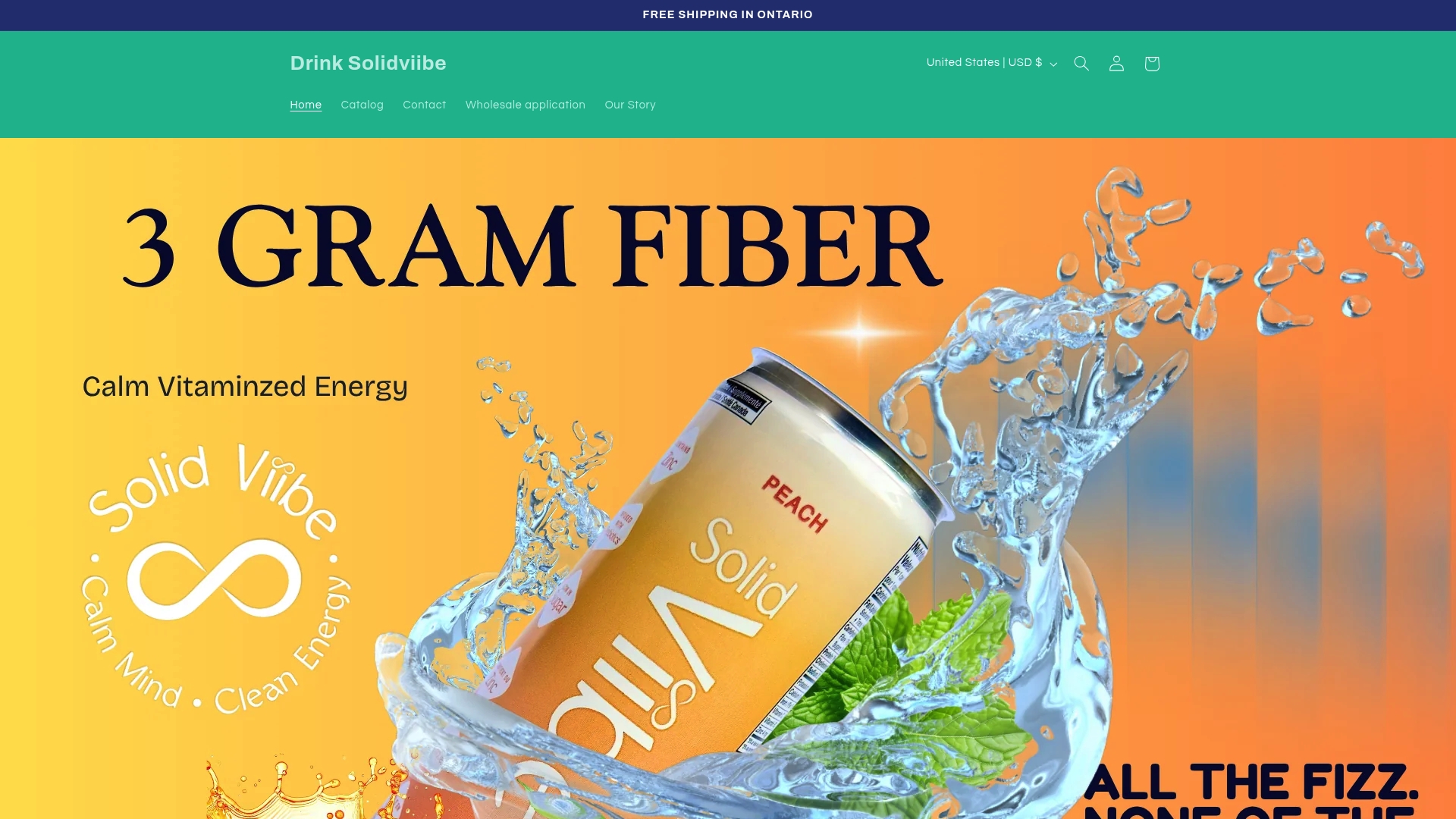
It suits people who want a genuine alternative to sugary soda or energy drinks without pretending a can can replace real nutrition. Drinksolidviibe’s tonics support gut health and immunity while staying within the low-sugar range this article recommends checking for, whether you’re picking up a single can or ordering a variety pack for the week. If you’re ready to see whether the formulation matches what you’d want on your own label, browse the current lineup and start with a pack that fits your routine.
Frequently asked questions
Do vitamin drinks work as well as pills or capsules? For most healthy adults, evidence doesn’t show a meaningful absorption advantage for liquids over tablets. Liquid formats mainly help people who struggle to swallow pills or who stick with a routine better in drink form.
Are vitamin drinks effective for weight loss or energy? No strong trial evidence supports vitamin drinks for weight loss, and any energy boost usually comes from sugar or caffeine, not the vitamins themselves. That’s a separate question from whether energy drinks work as stimulants, which depends on caffeine dose, not vitamin content.
What’s the difference between vitamin drinks and standard supplements? Vitamin drinks vs supplements largely comes down to format and added ingredients. A standard supplement delivers a fixed dose with no sugar or calories, while a vitamin drink adds flavouring, sweeteners, and often sugar alongside the nutrients.
Can I drink a vitamin drink every day? Only if the sugar content is low and the dosing is sensible, and ideally if bloodwork or a clinician has confirmed you have a gap worth addressing. Daily use of a high-sugar fortified drink is one of the clearest ways to erase any benefit.
Sources
- Effectiveness of a fortified drink in improving B vitamin biomarkers in older adults: a controlled intervention trial - PMC
- Supplemental nutrition drinks: help or hype? - Harvard Health Publishing
- Are vitamin drinks providing too many vitamins? | PBS NewsHour


