
Why natural ingredients matter in your drinks
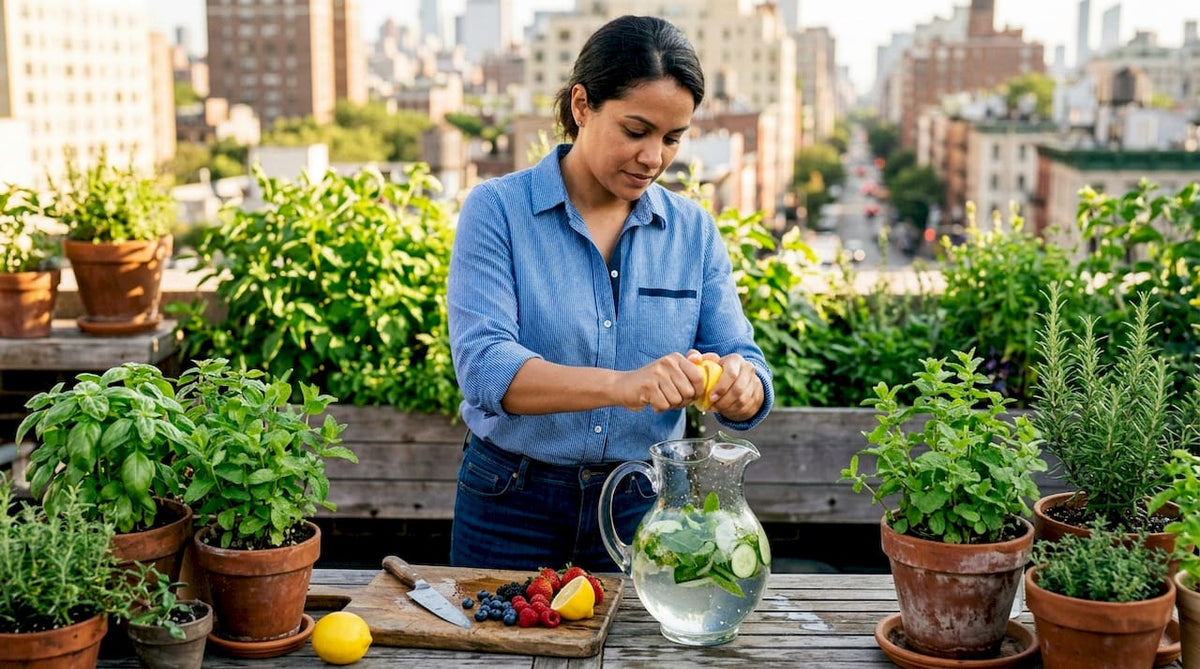
Natural ingredients in beverages are defined as flavour and nutritional compounds sourced from plants, fruits, herbs, and minerals rather than synthesised in a laboratory. Understanding why natural ingredients matter in drinks goes beyond a label preference. The body loses 2–3 litres of water daily, and what you drink to replace that loss directly affects your energy, focus, and long-term health. Choosing beverages built on natural ingredients, such as lemon, ginger, or passionfruit, gives you hydration plus nutritional value that processed drinks simply cannot match.
What health benefits do natural ingredients bring to beverages?
Natural ingredients deliver measurable health advantages that artificial additives cannot replicate. The difference shows up in hydration quality, nutritional density, and the absence of compounds that stress your body over time.
Hydration and cognitive performance
Dehydration at just 2% of body weight impairs both cognitive and physical performance. That threshold is easier to hit than most people realise, especially when the drinks you choose contain diuretics or high sugar loads that pull water from your cells. Natural beverages, including herbal teas, lemon water, and coconut water, hydrate without triggering that cycle.
Nutritional contributions from whole-food sources
A single serving of lemon water made with half a lemon delivers 15–20 mg of vitamin C, covering roughly 15–20% of an adult’s daily requirement. That is a meaningful nutritional contribution from one ingredient. Vitamin C supports immune function, collagen synthesis, and iron absorption, all from a squeeze of citrus rather than a synthetic supplement.

Avoiding harmful additives and excess caffeine
The CDC recommends a daily caffeine limit of 400 mg for healthy adults, equivalent to roughly 2–3 cups of coffee. Many heavily marketed energy drinks push consumers close to or beyond that threshold before noon. Natural beverages built around herbs, fruit, and sparkling water give you a lift without the caffeine spike and subsequent crash.
- No synthetic preservatives: Natural drinks rely on acidity, carbonation, or refrigeration rather than chemical stabilisers.
- Lower sugar loads: Whole-fruit flavours carry natural sugars alongside fibre and micronutrients, unlike refined sugar syrups.
- Antioxidant content: Herbal teas and green tea supply antioxidants that reduce inflammation and support cellular repair.
- No artificial colouring: Natural pigments from fruits and botanicals carry no known links to hyperactivity or allergic reactions.
Pro Tip: Read the ingredient list from bottom to top. Ingredients listed last appear in the smallest quantities. If a “functional” botanical appears near the end, its health contribution is likely minimal.
How do natural ingredients affect the flavour of drinks?
The flavour difference between natural and artificial ingredients is real, but the story is more complicated than most labels suggest. Understanding it helps you make genuinely informed choices.
The chemistry behind natural flavour
The Environmental Working Group confirms that both natural and artificial flavour labels often describe highly processed, chemically purified substances. A “natural lemon flavour” may be extracted through supercritical CO2 extraction, a high-pressure industrial process, rather than simply pressing a lemon. The source material is botanical, but the result is a concentrated isolate far removed from whole fruit.
That distinction matters for two reasons. First, whole-food sources carry a broader spectrum of flavour compounds, which is why fresh ginger tastes more complex than ginger extract. Second, processing for consistency can strip out minor compounds that give natural ingredients their character.
What separates authentic natural flavour from marketing
- Check the source declaration. Labels that state “made with real lemon” or “contains passionfruit juice” indicate whole-food inclusion, not just flavour extract.
- Look for juice content percentages. A beverage listing 5% real fruit juice contains meaningful natural flavour compounds alongside the extract.
- Assess the colour. Natural pigments from fruit and botanicals produce muted, variable colours. Unnaturally vivid hues signal synthetic dyes.
- Smell before you sip. Authentic natural flavours have layered, slightly imperfect aromas. Artificial flavours tend to smell one-dimensional and overly sweet.
“Natural flavours often undergo significant laboratory processing, meaning the health benefits consumers associate with them come primarily from whole-food sources, not from flavour additives alone.” Environmental Working Group, 2026
The sensory payoff of genuinely natural ingredients is depth and authenticity. Passionfruit has tartness, floral notes, and a slight bitterness that synthetic versions flatten into a single sweet note. That complexity is what makes a well-formulated natural sparkling drink satisfying rather than cloying.
Why are natural drinks better than sugary or artificially sweetened options?
The case against sugary and artificially sweetened beverages is not just about calories. The health risks are structural, and the alternatives marketed as solutions often fall short.
The problem with artificial sweeteners
The Heart Foundation states there is insufficient evidence to recommend alternative sweeteners such as stevia or aspartame as substitutes for plain water or whole natural ingredients. That finding is significant. It means the “zero sugar” positioning of many drinks does not automatically make them a healthy choice. The long-term metabolic effects of regular sweetener consumption remain unclear.
Pro Tip: When evaluating a “healthy” drink, ask whether it would be better replaced by water with a slice of fruit. If the answer is yes, the drink is likely more marketing than nutrition.
The functional ingredient illusion
Taurine and similar additives appear in many energy and wellness drinks primarily for marketing appeal rather than physiological benefit. When an ingredient appears near the bottom of the list, it is present in trace amounts that produce no meaningful effect. This is a common tactic: load the front label with impressive-sounding botanicals, then include them at negligible concentrations.
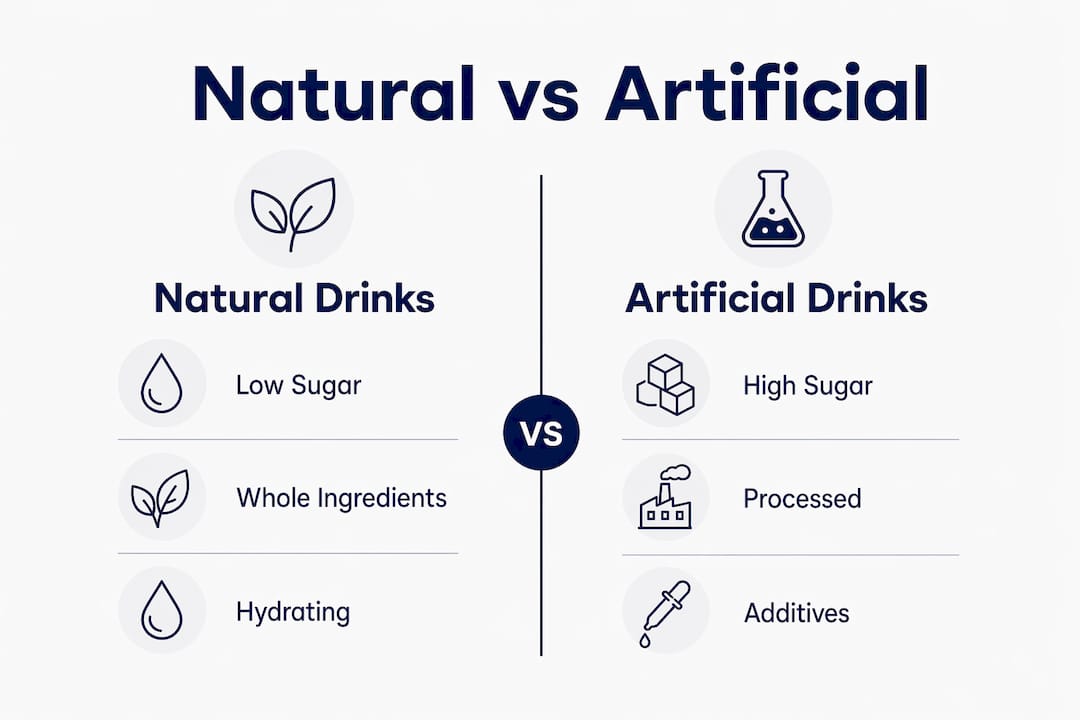
| Feature | Natural ingredient drinks | Sugary or artificially sweetened drinks |
|---|---|---|
| Sugar content | Low to moderate, from whole fruit | High refined sugar or synthetic sweeteners |
| Nutritional value | Vitamins, antioxidants, minerals | Minimal to none |
| Flavour authenticity | Complex, layered, variable | Uniform, often one-dimensional |
| Hydration quality | Supports cellular hydration | May impair hydration at high sugar levels |
| Additive load | Low, relies on natural preservation | High, preservatives, dyes, and stabilisers |
| Long-term evidence | Supported by whole-food nutrition research | Limited or mixed evidence for sweeteners |
The table makes the trade-off clear. Natural ingredient drinks deliver more per sip, not just in flavour but in nutritional return.
What practical tips help you choose healthier natural beverages?
Choosing natural drinks becomes straightforward once you know what to look for. The best options share a short ingredient list, identifiable whole-food sources, and no reliance on synthetic sweeteners.
Natural drinks worth adding to your routine
- Lemon water: Provides vitamin C, supports digestion, and costs almost nothing to make at home.
- Herbal teas: Chamomile, peppermint, and ginger teas supply antioxidants and support hydration without caffeine.
- Coconut water: A natural source of potassium and electrolytes, useful after exercise.
- Green tea: Contains polyphenols linked to reduced inflammation and improved cardiovascular markers.
- Natural sparkling beverages: Carbonated drinks built on real fruit and botanical extracts satisfy the craving for fizz without the sugar load.
How to evaluate an ingredient list quickly
| What you see | What it means |
|---|---|
| “Natural flavour” only | Likely a processed extract, not whole fruit |
| Named juice (e.g., “lemon juice”) | Genuine whole-food inclusion |
| Sweetener listed second or third | High sweetener concentration |
| Short list (under 8 ingredients) | Lower additive load, more transparency |
| Botanical listed last | Trace amount, minimal health effect |
Drinksolidviibe applies this standard directly. Its sparkling beverages use functional flavours like lemon-ginger and passionfruit to deliver both refreshment and genuine botanical character, without artificial additives or excess sugar. For consumers who want the satisfaction of a sparkling drink without the trade-offs, that formulation approach is the practical answer to the question of why natural ingredients matter in drinks.
Key takeaways
Natural ingredients in beverages deliver health, flavour, and hydration benefits that processed or artificially sweetened drinks cannot match, making them the stronger choice for long-term wellness.
| Point | Details |
|---|---|
| Hydration quality matters | Natural drinks support cellular hydration; sugary drinks can impair it at high concentrations. |
| Whole-food sources beat extracts | Vitamin C from lemon juice and antioxidants from herbal tea outperform synthetic additives. |
| “Natural flavour” is not always whole food | Both natural and artificial labels often describe processed isolates; look for named juice sources. |
| Artificial sweeteners lack long-term evidence | The Heart Foundation finds insufficient evidence to recommend them over natural hydration sources. |
| Functional additives need scrutiny | Ingredients listed last appear in trace amounts and rarely deliver the benefits shown on the front label. |
What I’ve learned about reading “natural” on a drinks label
The word “natural” on a beverage label is one of the most misused terms in the food industry. I have spent years watching consumers reach for drinks labelled with botanical names and assume the health benefits follow automatically. They often do not.
The most important shift I have seen in health-conscious consumers is moving from label-reading to ingredient-reading. A drink can feature a lemon on the front and contain less than 1% actual lemon juice. The regulatory threshold for “natural flavour” in most markets is about source origin, not concentration or nutritional contribution. That gap between perception and reality is where most people get misled.
What actually works is looking for drinks where the natural ingredient is doing real work: providing flavour, contributing micronutrients, or replacing something harmful. Ginger in a sparkling drink should be there because it adds complexity and supports digestion, not because it looks good on a label. Passionfruit should contribute actual juice, not just an extract that mimics the aroma.
The brands getting this right are the ones with short ingredient lists and no need to hide behind marketing language. When a drink tastes genuinely good without sugar, artificial sweeteners, or synthetic flavours, the natural ingredients are doing their job. That is the standard worth holding every beverage to.
— Sharon
Drinksolidviibe: natural sparkling drinks worth trying

Drinksolidviibe builds its sparkling beverages around the principle that a drink should taste good because of what is in it, not despite what has been added to mask inferior ingredients. The lemon-ginger sparkling beverage delivers the sharp warmth of real ginger alongside citrus brightness, without artificial sweeteners or synthetic flavours. The passionfruit option brings the layered tartness that only genuine fruit can produce. For consumers who want to replace sugary sodas or heavily caffeinated drinks with something that actually supports their health goals, the Drinksolidviibe variety pack is a practical starting point.
FAQ
What makes natural ingredients better for hydration?
Natural drinks like herbal teas and lemon water hydrate without the high sugar or caffeine loads that can impair fluid absorption. The body processes them more efficiently than heavily sweetened beverages.
Are natural flavours in drinks actually healthy?
Not always. The Environmental Working Group confirms that natural flavours are often highly processed isolates. Real health benefits come from whole-food sources like actual fruit juice or botanical extracts present in meaningful quantities.
How much caffeine is safe in a day?
The CDC sets the recommended daily caffeine limit at 400 mg for healthy adults, roughly equivalent to 2–3 cups of coffee. Many energy drinks push consumers close to this limit in a single serving.
Are artificial sweeteners a safe alternative to sugar in drinks?
The Heart Foundation finds insufficient evidence to recommend artificial sweeteners such as stevia or aspartame as healthy substitutes for natural hydration sources. Long-term effects remain unclear.
How do I know if a drink truly contains natural ingredients?
Look for named whole-food sources in the ingredient list, such as “lemon juice” or “ginger extract,” rather than the generic term “natural flavour.” Short ingredient lists with identifiable sources are the clearest signal of genuine natural content.
Recommended
- Solidviibe Sparkling Beverage Variety Pack - 12 Cans (Lemon-Ginger, Pe – Drink Solidviibe
- Solidviibe Lemon Ginger — Functional Sparkling Beverage – Drink Solidviibe
- Solidviibe Passionfruit — Functional Sparkling Beverage – Drink Solidviibe
- Solidviibe Peach — Functional Sparkling Beverage – Drink Solidviibe


