

Vitamin-enriched beverages fall into seven main categories: vitamin-enhanced waters, fortified juices, fortified dairy and plant milks, powdered drink mixes, nutritional supplement shakes, vitaminated sports and energy-style drinks, and sparkling functional tonics. Quick examples by category:
- Vitamin-enhanced water: a lightly flavoured, low-calorie water with added B vitamins and vitamin C
- Fortified juice: orange juice with added vitamin D and calcium
- Fortified dairy or plant milk: cow’s milk or oat milk enriched with vitamins A and D
- Powdered drink mix: a multivitamin electrolyte packet dissolved in water, often with 1,000 mg vitamin C and a full B-complex
- Nutritional supplement shake: a ready-to-drink clear or opaque beverage with protein and 19+ vitamins and minerals
- Sports or energy-style drink: an electrolyte-forward drink with added B vitamins and sometimes vitamin C or zinc
- Sparkling functional tonic: a carbonated, low-sugar tonic with added vitamins, minerals, and natural flavour sources
Canadians can find most of these at grocery chains, pharmacies like Shoppers Drug Mart, health food stores, and online retailers. The sparkling functional tonic category, including Drinksolidviibe’s Solidviibe Sparkling Functional Tonic, is most readily available direct-to-consumer online.
Table of Contents
- What are the main types of vitamin-enriched beverages?
- Which vitamins and minerals are commonly added, and why?
- Benefits versus limitations of fortified drinks
- How to read labels and choose a vitamin-enriched drink
- When should you actually drink them?
- How Solidviibe’s sparkling tonic fits this category
- Key takeaways
- The case for being selective about fortified drinks
- Try a low-sugar vitamin-enriched sparkling tonic
- Sources and further reading
What are the main types of vitamin-enriched beverages?
Vitamin-enhanced waters
These are clear or lightly tinted, low-calorie drinks with water-soluble vitamins (typically B-complex and vitamin C) added after filtration. Calories usually run low per serving. They suit daily hydration when you want a mild micronutrient top-up without extra sugar or protein.

Fortified juices
Orange, apple, and cranberry juices are common carriers for calcium, vitamin D, and vitamin C fortification. Because the juice itself already contains some natural vitamins, the added nutrients layer on top of a flavour people already enjoy. A good fit for breakfast routines, though watch the total sugar load.
Fortified dairy and plant milks
Milk fortification with vitamin D has been standard practice in Canada for decades, and vitamin A is also commonly added. Plant-based alternatives — oat, soy, almond, and rice milks — are typically fortified to match dairy’s vitamin D and calcium profile. These are one of the most reliable daily sources of both nutrients for Canadians who drink them consistently.
Powdered drink mixes
Sold as single-serve packets or tubs, drink mixes dissolve into 250–500 ml of water and often carry a comprehensive vitamin profile alongside electrolytes, all at low calorie counts. They are easy to pack for travel or keep at a desk.
Pro Tip: If your routine is unpredictable, powdered mixes travel better than RTD bottles and let you control the concentration by adjusting the water volume.
Nutritional supplement shakes
These range from clear, fruit-flavoured drinks with 19 vitamins and minerals plus protein to opaque, milk-based shakes with significant calorie counts. Clinical formulations can deliver protein and calories per serving, making them suited to recovery from illness or surgery rather than casual daily use.
Sports and energy-style drinks
Electrolyte-forward drinks with added B vitamins, vitamin C, and sometimes zinc are the most widely marketed category in Canadian convenience stores. They support hydration during exercise but often carry more sodium and sugar than the other formats.
Sparkling functional tonics
A newer format: lightly carbonated, low-sugar beverages that combine natural flavour sources with added vitamins and minerals. They sit between a sparkling water and a supplement drink, offering a more enjoyable daily ritual than swallowing a capsule. Drinksolidviibe’s Solidviibe Sparkling Functional Tonic fits squarely here, with flavours like lemon-ginger, peach, and passionfruit.
Which vitamins and minerals are commonly added, and why?
Beverage formulators match specific micronutrients to specific goals. Here is what you will see most often on Canadian labels and what each one actually does:
- B-complex (B1, B2, B3, B5, B6, B7, B9, B12): supports energy metabolism; B12 is particularly relevant for plant-based eaters
- Vitamin C: immune support and antioxidant function; water-soluble and stable in most drink formats
- Vitamin D: bone health, immune regulation, and mood support; Canada’s limited sunlight makes this one of the most commonly deficient nutrients nationally
- Vitamin A: vision, immune function, and skin health; less common in clear drinks because of formulation constraints (see below)
- Vitamin E: antioxidant protection; also harder to stabilise in water-based formats
- Calcium: bone and muscle function; often paired with vitamin D because D is required for calcium absorption
- Potassium and magnesium: electrolyte balance, muscle function, and hydration
- Zinc: immune support and wound healing; appears in some immunity-focused drink mixes
- Iron: oxygen transport; found mainly in clinical or specialty drinks rather than everyday functional beverages
A note on fat-soluble vitamins. Vitamins A, D, E, and K do not dissolve in water on their own. Adding them to a clear, water-based drink requires emulsification to keep them stable and bioavailable. That is why some multivitamin liquids look slightly cloudy rather than crystal-clear, and why fat-soluble vitamins are less common in plain sparkling waters. Mineral forms matter too: some mineral salts and chelates absorb more readily than others, and certain minerals can interact with each other in solution, so formulation choices affect how much of the label claim you actually absorb.
Benefits versus limitations of fortified drinks
Vitamin-enriched beverages do several things well. They deliver targeted micronutrients in a convenient, hydrating format, which suits people who struggle to swallow pills or who simply want to fold a supplement into a drink they already enjoy. Low-calorie enriched waters and sparkling tonics let you top up specific nutrients without adding meaningful calories. For Canadians who do not get enough sunlight in winter, a fortified milk or vitamin D drink mix can meaningfully close a real dietary gap.
The limitations are worth knowing, though.
Health Canada’s position: Fortification of foods and beverages in Canada is regulated under the Food and Drug Regulations. Voluntary fortification must meet specific conditions, and Health Canada advises consumers to check the Nutrition Facts table and % Daily Value to understand how a product fits within their total daily intake. Milk fortification with vitamins A and D is mandatory in Canada, making fluid milk one of the most consistently fortified staples in the Canadian diet.
Bioavailability varies by formulation. Vitamins degrade with exposure to heat, light, and oxygen, so a drink that sat in a warm warehouse or a sunny store shelf may deliver less than its label claims. Some products compensate by over-fortifying at production, but that is not universal. Added sugars are another issue: certain fortified juices and sports drinks carry enough sugar to offset the nutritional benefit for people managing blood glucose.
The most important limitation is dose stacking. If you drink a fortified juice at breakfast, a vitamin water at lunch, and a supplement shake in the afternoon, you can easily exceed the tolerable upper intake levels for fat-soluble vitamins or minerals without realising it. Clinical nutritional drinks with 28+ vitamins and minerals are designed for medically supervised use, not casual daily consumption.
How to read labels and choose a vitamin-enriched drink
A label can tell you almost everything you need to know if you know what to look for. Work through these steps before you buy:
- Check the serving size first. The % Daily Value figures mean nothing until you know how much liquid counts as one serving. A bottle that looks single-serve may list two servings.
- Read the % Daily Value (% DV) for each nutrient. Health Canada defines 5% DV or less as a little of a nutrient; 15% DV or more as a lot. A drink listing 100% DV of vitamin C per serving is delivering your full daily target in one bottle.
- Find the absolute dose (mg or µg). The % DV is useful for comparison, but the actual milligram or microgram figure tells you whether the dose is meaningful or cosmetic. 10 mg of vitamin C is technically “added” but barely registers.
- Scan added sugars and total calories. These appear separately from total sugars on Canadian Nutrition Facts tables. A healthy vitamin beverage should not require you to budget for a dessert.
- Check ingredient order. Ingredients are listed by weight, descending. If sugar or glucose-fructose appears in the first three ingredients, the drink is primarily a sweetened beverage with vitamins added.
- Look at the vitamin and mineral forms. Magnesium citrate absorbs more readily than magnesium oxide; methylcobalamin is a more active form of B12 than cyanocobalamin. Better products name the form.
- Note emulsifiers or fats. If the drink contains fat-soluble vitamins (A, D, E, K), there should be an emulsifier or a fat source listed to support absorption.
- Look for third-party testing claims. NSF Certified for Sport or Informed Sport logos indicate independent verification of label accuracy and contaminant testing.
Pro Tip: For a daily low-dose boost, a drink hitting 15–25% DV per nutrient is the sweet spot. If you are targeting a specific deficiency under clinician guidance, you likely need a therapeutic supplement rather than a functional drink.
A quick label example: a sparkling tonic listing Vitamin C 60 mg (67% DV), Vitamin B6 0.7 mg (54% DV), Vitamin D3 5 µg (25% DV) per 355 ml can is giving you a meaningful daily contribution across three nutrients without pushing you toward an upper limit. That is the kind of panel worth looking for on vitamin-enriched sparkling drinks.
When should you actually drink them?
Timing matters more than most labels admit. A few practical guidelines:
- Morning: B-vitamin drinks or fortified juices pair well with breakfast. B vitamins support energy metabolism and are water-soluble, so your body uses what it needs and excretes the rest. Taking them with food reduces the chance of nausea from high-potency B-complex on an empty stomach.
- Post-workout: Electrolyte-forward drinks with potassium and magnesium help replace what sweat removes. If your session was long or intense, a drink with both electrolytes and a modest protein contribution supports recovery better than plain water. For a detailed comparison of sparkling versus sports drink formats, the sparkling vs. sports drink guide breaks this down well.
- With meals: Fat-soluble vitamins (A, D, E, K) absorb significantly better when consumed alongside dietary fat. If your fortified drink contains any of these, have it with a meal that includes some fat rather than on an empty stomach.
- Immune support during cold season: Vitamin C and zinc drinks are most useful as a consistent daily habit rather than a last-minute intervention. Starting them at the first sign of a cold has some evidence behind it, but the benefit is modest compared to consistent intake.
- Bone health routine: Vitamin D and calcium work as a pair. A fortified milk or a vitamin D drink taken with a calcium-containing meal is more effective than either nutrient alone.
The line between a functional hydration drink and a clinical nutritional product matters here. A clinical drink providing 300 kcal and 12 g of protein per serving is designed for people with elevated medical needs, not everyday wellness. If you are considering a high-calorie clinical product for weight maintenance or recovery, a registered dietitian or physician should be involved in that decision.
How Solidviibe’s sparkling tonic fits this category
Drinksolidviibe’s Solidviibe Sparkling Functional Tonic is a concrete example of the sparkling functional tonic category: low sugar, no artificial additives, naturally flavoured, and nutrient-enriched with vitamins and minerals. It comes in lemon-ginger, peach, and passionfruit varieties, available as a variety pack for online purchase and through wholesale distribution to Canadian retail partners.
What to look for on the Solidviibe label: low sugar per serving, vitamins and minerals listed with their % DV, natural flavour sources (fruit-derived), no artificial colours or preservatives, and a clearly stated serving size. The sparkling format makes it an easy daily ritual for people who find still water boring but want to avoid the sugar load of conventional sodas or juice drinks.
For Canadians who want to understand how natural fruit extracts contribute vitamins and phytonutrients to a formulation, the natural fruit extracts guide on the Drinksolidviibe blog explains the ingredient logic clearly. The tonic is available direct-to-consumer at drinksolidviibe.com and through selected Canadian retail and wholesale channels.
Key takeaways
Vitamin-enriched beverages are most useful when you match the format and nutrient profile to a specific goal rather than picking any fortified drink at random.
| Point | Details |
|---|---|
| Seven main categories | Waters, fortified juices, dairy/plant milks, drink mixes, supplement shakes, sports drinks, and sparkling tonics each serve different goals. |
| Target nutrients by goal | B vitamins for energy, vitamin D and calcium for bone health, vitamin C and zinc for immune support, electrolytes for hydration and recovery. |
| Label checklist essentials | Check serving size, % DV, absolute dose, added sugars, and vitamin forms before buying. |
| Safety with upper limits | Stacking multiple fortified products daily can push fat-soluble vitamins or minerals past tolerable upper intake levels; consult a dietitian if unsure. |
| Drinksolidviibe option | The Solidviibe Sparkling Functional Tonic is a low-sugar, naturally flavoured, nutrient-enriched sparkling option available to Canadians online and through retail partners. |
The case for being selective about fortified drinks
There is a version of the vitamin-drink conversation that treats every fortified beverage as roughly equivalent, and that framing does readers a disservice. A clinical shake designed for post-surgical recovery and a lightly fortified sparkling water are both “vitamin-enriched beverages,” but they are solving entirely different problems at entirely different dose levels.
The more useful question is not “does this drink have vitamins?” but “does this drink have the right vitamins, at a meaningful dose, in a form I will actually absorb, without a sugar or calorie cost I do not want?” Most products on Canadian shelves pass one or two of those tests. Fewer pass all four.
The sparkling functional tonic format is worth taking seriously precisely because it clears the bar most people actually care about: low sugar, real flavour, a nutrient profile that contributes without overwhelming, and a format pleasant enough to drink every day. That last point is underrated. The best vitamin drink is the one you actually consume consistently, not the one with the most impressive label.
Whole foods remain the foundation. A diet built around vegetables, legumes, dairy, and whole grains will always outperform any drink for micronutrient density and bioavailability. But for the gaps, the travel days, the post-workout window, or the winter months when Canadian sunlight is not doing you any favours, a well-formulated fortified drink earns its place.
Try a low-sugar vitamin-enriched sparkling tonic
If you have been looking for a daily vitamin-enriched drink that does not taste like a supplement, the Solidviibe Sparkling Beverage Variety Pack is a practical starting point. You get 12 cans across three naturally flavoured varieties (lemon-ginger, peach, and passionfruit), each formulated with vitamins and minerals, low sugar, and no artificial additives.
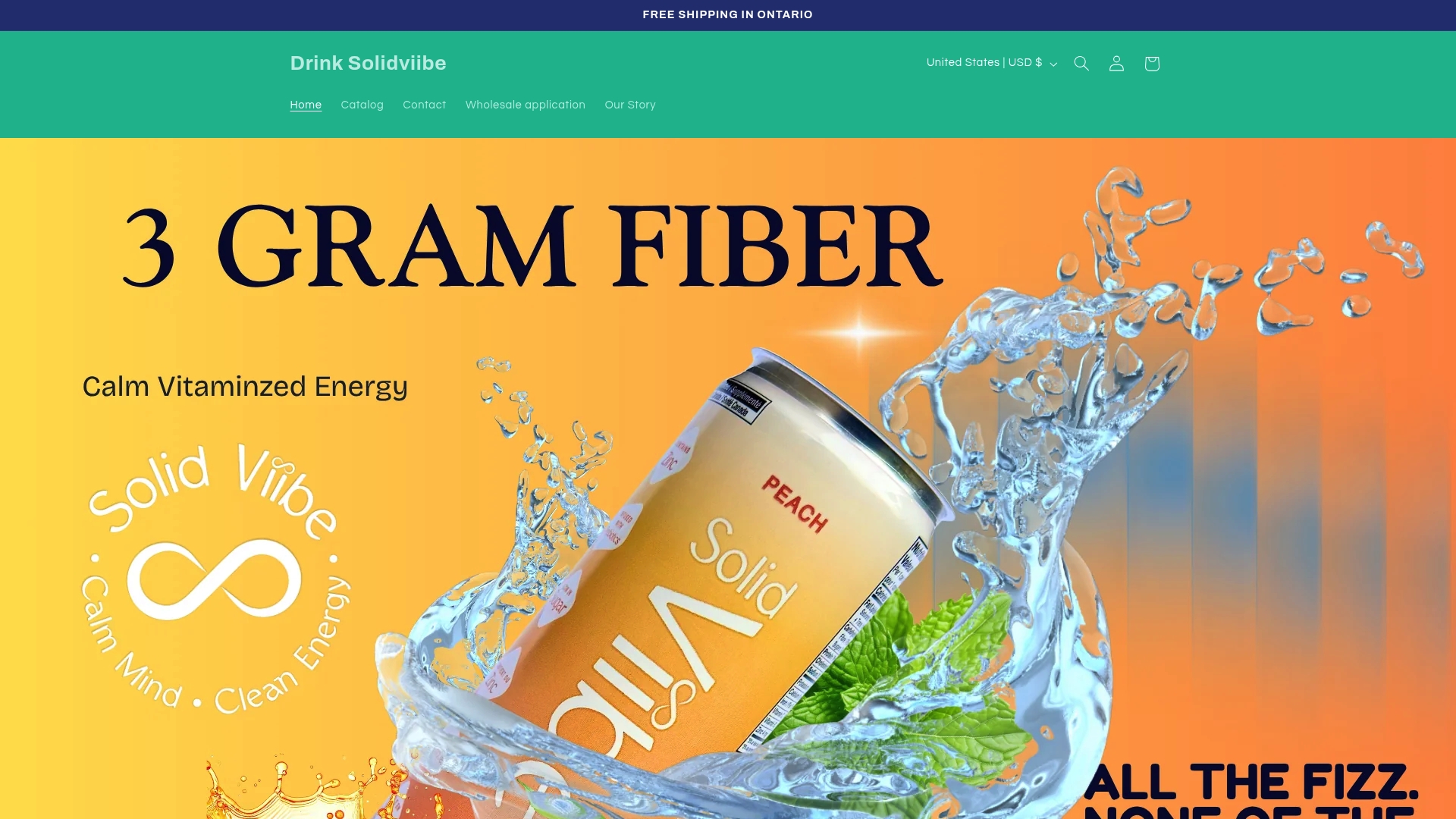
It is a straightforward way to fold a daily micronutrient boost into a drink you will actually look forward to. Order directly through drinksolidviibe.com, with wholesale options available for Canadian retailers. This article is general nutritional information, not personalised medical advice; consult a registered dietitian or physician for therapeutic dosing guidance specific to your situation.
Sources and further reading
Why these sources matter: The references below include regulatory guidance from Health Canada, peer-reviewed nutrition research, and ingredient formulation expertise. Together they support the claims in this article about fortification practices, nutrient functions, bioavailability, and label interpretation.
- Healthy Beverage Guidelines, Harvard T.H. Chan School of Public Health — A thorough, evidence-based overview of beverage categories and their nutritional implications, including fortified milks and juice.
- Vitamins and minerals in drinks, Palmer Holland — Ingredient-level guidance on formulation challenges, fat-soluble vitamin emulsification, and mineral bioavailability in beverage applications.
- Fortisip clinical nutritional drink, Nutricia — Product reference illustrating the nutrient density of clinical supplement drinks versus everyday functional beverages.
- Ener-C Multivitamin Drink Mix, Ener-Life — Example of a powdered drink mix format with a comprehensive vitamin and electrolyte profile.
- BOOST Breeze, BOOST Nutritional Drinks — RTD example illustrating a broad micronutrient panel in a clear, fruit-flavoured format.
- Phytonutrient beverages explained, Drinksolidviibe — Explains how fruit and vegetable powders deliver vitamins and minerals naturally in beverage formulations.
Recommended
- Best drinkmisfits.com alternatives for Canadians in 2026 – Drink Solidviibe
- Phytonutrient beverages: what they are and why they matter – Drink Solidviibe
- Artificial dye-free drink options for Canadian families: 2026 guide – Drink Solidviibe
- Fizzy drinks without artificial colours: your Canadian guide – Drink Solidviibe