
Sugar in soda: what health-conscious shoppers need to know

A standard 12-ounce (355 ml) can of regular soda contains about 42 grams of added sugar — roughly 10 teaspoons — and around 150 calories. That single can already blows past the American Heart Association’s daily limit of 25 g for most women and nearly matches the 36 g limit for most men. The Dietary Guidelines for Americans cap added sugar at less than 10% of total daily calories, which works out to about 50 g on a 2,000-calorie diet.
Here’s what that means in practice:
- One 12-oz can of regular cola uses up the entire recommended daily added-sugar budget for many women according to the AHA guidelines.
- Those 150 calories are primarily empty, with little to no fibre, vitamins, or minerals.
- Larger bottles (20 oz, 2 L) contain multiple servings; always check “servings per container” on the label.
- Portion distortion is real: a single-serve 20-oz bottle can carry a high amount of sugar, yet many people drink it as one serving.
Key takeaways
A single 12-oz can of regular soda delivers roughly 10 teaspoons of added sugar, which exceeds the AHA’s daily limit for most women and nearly matches it for men.
| Point | Details |
|---|---|
| Sugar per standard can | A 12-oz regular soda averages about 42 g (≈10 tsp) of added sugar and 150 calories. |
| AHA daily limits | Most women: 25 g/day; most men: 36 g/day — one can of cola meets or exceeds both. |
| Dietary Guidelines ceiling | Less than 10% of daily calories from added sugar; about 50 g on a 2,000-calorie diet. |
| Top health risks | Regular SSB intake is associated with weight gain, type 2 diabetes, and heart disease. |
| Drinksolidviibe swap | Low-sugar, natural-ingredient sparkling tonics with vitamins and minerals replace soda without sacrificing flavour. |
Table of Contents
- How much sugar is in soda? A quick-reference comparison
- Why sugar in soda is a genuine health concern
- How much added sugar is actually too much?
- Are diet and zero-sugar sodas actually healthier?
- Practical steps to cut back on soda
- What to look for in a lower-sugar beverage alternative
- Why reducing sugar in your drinks matters more than most people realise
- Drinksolidviibe: a lower-sugar alternative built for this exact swap
- Sources
How much sugar is in soda? A quick-reference comparison
The values below come from Nutrition Facts labels and USDA FoodData Central, cross-referenced with the FDA’s guidance on how added sugars are declared on labels. Sugar grams are rounded to the nearest whole gram; teaspoons use the standard conversion of 4.2 g per teaspoon. Calorie figures reflect total calories per serving as listed on the label.
A few things stand out. Mountain Dew is the outlier at 46 g per can — 11 teaspoons of sugar before lunch. Gatorade’s 20-oz bottle is the standard retail size, so that 34 g figure is what most people actually consume in one sitting, not the 12-oz serving sometimes listed on older labels. Red Bull looks modest by comparison, but its 8.4-oz can is also smaller; scaled to 12 oz, the sugar density is similar to cola.
Marketing language can obscure these numbers. The UConn Rudd Center’s Sugary Drink FACTS analysis documents how “health halo” cues on packaging lead consumers to underestimate sugar content. The reliable move is always the same: go straight to the “Added sugars” line on the Nutrition Facts panel.
Why sugar in soda is a genuine health concern
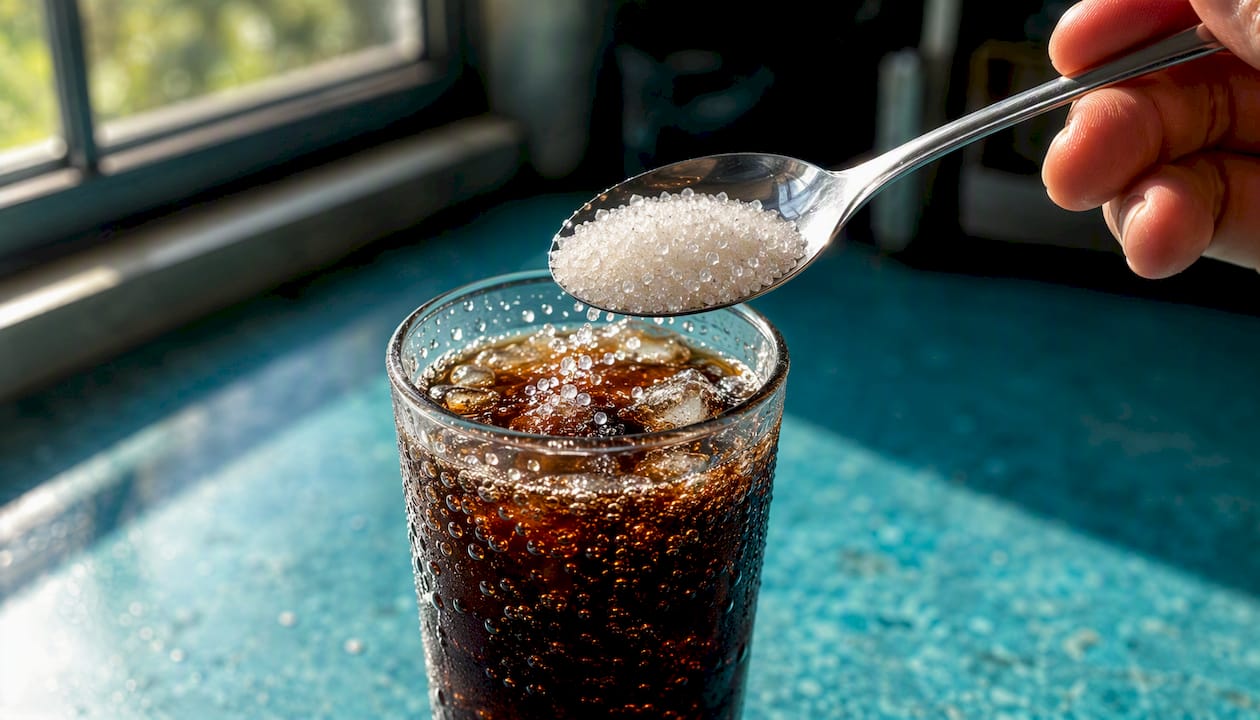
The core problem is not sugar in isolation. It’s concentrated, liquid sugar that delivers calories with nothing else attached. As Harvard T.H. Chan’s Nutrition Source puts it, sugary drinks are the single largest source of added sugars in U.S. diets, and liquid calories simply do not trigger the same satiety signals as solid food. You drink a can of cola and your brain doesn’t register those 150 calories the way it would register 150 calories of oatmeal. The result: total daily energy intake goes up, not sideways.
The downstream risks are well-documented:
- Weight gain and obesity. Cohort studies consistently link frequent sugar-sweetened beverage (SSB) consumption with weight gain in both children and adults, partly because liquid calories add to rather than replace solid food intake.
- Type 2 diabetes and cardiometabolic risk. Meta-analyses of prospective cohort data report associations between higher SSB intake and increased risk of type 2 diabetes and cardiovascular disease. These are observational findings, so causation isn’t proven, but the signal is consistent across populations.
- Dental caries. The combination of sugar and acidity in carbonated drinks creates an environment that erodes enamel and feeds cavity-causing bacteria. This risk applies to diet sodas too, given their acidity.
- Blood glucose spikes. Liquid sugar is absorbed quickly, producing rapid rises in blood glucose and insulin. Over time, repeated spikes are associated with insulin resistance.
The National Cancer Institute identifies SSBs as a major contributor to added sugar intake at the population level, which is why public health guidance consistently singles them out.
How much added sugar is actually too much?
Two authoritative benchmarks give you a practical ceiling:
- American Heart Association. Most women: no more than 25 g of added sugar per day (~6 teaspoons). Most men: no more than 36 g per day (~8.5 teaspoons). Children: even lower, varying by age and calorie needs.
- U.S. Dietary Guidelines 2020–2025. Less than 10% of total daily calories from added sugars. On a 2,000-calorie diet, that’s under 50 g (about 12 teaspoons) per day.
Translating those limits into soda servings:
- A woman following the AHA limit (25 g) has used her entire daily budget with one 12-oz can of Coca-Cola Classic (39 g) — and then some.
- A man following the AHA limit (36 g) hits his ceiling with one 12-oz can of Mountain Dew (46 g).
- On the Dietary Guidelines standard (50 g/day), one 20-oz Gatorade (34 g) leaves only 16 g of added sugar for everything else you eat that day.
Pro Tip: Check the “Added sugars” line specifically, not just “Total sugars.” Total sugars includes naturally occurring sugars (like those in milk or fruit), while the added sugars line tells you exactly what the manufacturer put in.
The FDA’s updated Nutrition Facts label, which now requires a dedicated “Added sugars” line, makes this comparison straightforward. The label also shows added sugars as a percentage of the 50 g Daily Value, so you can see at a glance how one drink affects your daily budget.
Are diet and zero-sugar sodas actually healthier?
The short answer: they remove the added sugar, which is a real benefit, but they’re not a clean bill of health.
What diet sodas do well:
- Zero added sugar and zero (or near-zero) calories per serving.
- Immediate reduction in sugar and calorie intake for people switching from regular soda.
- Useful as a short-term bridge while adjusting to lower-sweetness preferences.
Where the picture gets murkier:
- Non-nutritive sweeteners (aspartame, sucralose, acesulfame-K) are approved as safe by the FDA, but long-term evidence on appetite and metabolic effects is mixed. Some observational studies suggest frequent diet soda drinkers don’t lose weight as expected, possibly because sweetness cues still influence appetite.
- Diet sodas remain acidic, so dental enamel erosion risk persists.
- There are no large, long-term randomised controlled trials confirming that switching to diet soda produces meaningful health improvements beyond calorie reduction.
The CDC’s guidance on rethinking your drink notes that while diet/zero options remove added sugar, ingredient-focused low-sugar functional tonics offer a middle path for consumers who want something more than carbonated water but less than a can of aspartame.
Pro Tip: If you’re using diet soda as a stepping stone away from regular soda, that’s a reasonable short-term strategy. If you’re drinking it daily for years as a “healthy” choice, the evidence doesn’t fully support that framing. Unsweetened sparkling water or a low-sugar functional tonic is a cleaner long-term swap.
Practical steps to cut back on soda
Cutting soda doesn’t require willpower alone. It requires a plan that accounts for habit, flavour preference, and social situations.
- Audit your actual intake. Track every soda for one week, including size. Most people underestimate by at least one serving per day.
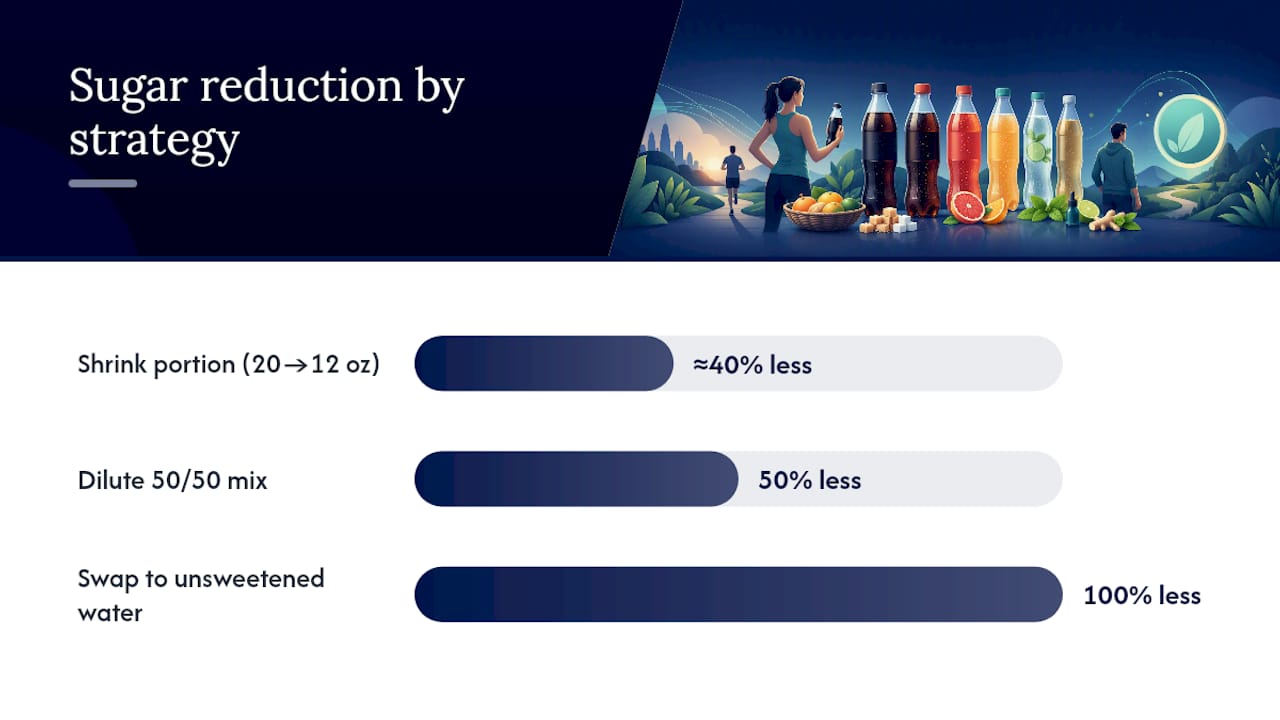
- Shrink the portion first. Switch from a 20-oz bottle to a 12-oz can. You cut sugar by roughly 40% without changing the drink.
- Dilute with sparkling water. A 50/50 mix of soda and unsweetened sparkling water halves the sugar immediately. Most people find the flavour acceptable within a week.
- Replace one daily soda with a flavoured alternative. Unsweetened sparkling water with a squeeze of citrus, a low-sugar functional tonic, or cold-brew unsweetened tea all satisfy the carbonation or flavour craving with far less sugar.
- Use natural flavour boosters. Fresh lemon, lime, cucumber, or mint in sparkling water gives you the sensory experience of a flavoured drink without any added sugar.
- Plan for social situations. Order a smaller size, ask for sparkling water with a lime, or bring your own canned alternative. Having a default order removes the decision in the moment.
Quick swap ideas worth keeping on hand:
- Unsweetened sparkling water (zero sugar, satisfies carbonation craving)
- Infused water with citrus or berries (zero added sugar, visually appealing)
- Low-sugar functional sparkling tonics with natural ingredients (see carbonated drink alternatives)
- Unsweetened iced tea or cold-brew green tea (minimal sugar, some antioxidants)
- Sparkling water with a splash of 100% fruit juice (small sugar hit, real flavour)
Pro Tip: If you notice afternoon energy crashes, poor sleep, or increased dental sensitivity, those can be early signals that your soda intake is affecting your health. Use them as a trigger to reassess rather than waiting for a doctor’s visit.
For parents, the sparkling water health benefits guide covers how to make the swap appealing for kids too.
What to look for in a lower-sugar beverage alternative
Not all “healthier” drinks deliver on the label. Here’s a short checklist for evaluating any replacement:
- Added sugar per serving: aim for under 5 g, ideally zero or close to it.
- Sweetener type: natural sweeteners (fruit juice concentrate in small amounts, stevia) are generally preferable to synthetic ones, though even natural sweeteners add calories if used heavily.
- Nutrient content: does the drink contribute anything beyond hydration? Vitamins, minerals, or functional ingredients (ginger, probiotics) add genuine value.
- Absence of artificial additives: artificial colours, flavours, and preservatives are worth avoiding if ingredient transparency matters to you.
- Label clarity: the FDA’s added sugars guidance makes it straightforward to check; a transparent brand will have a clean, readable label.
Categories that tend to meet these criteria: unsweetened sparkling water, lightly sweetened functional sparkling tonics made with natural ingredients, and low-sugar bottled iced teas without added sweeteners. The vitamin-enriched beverage examples guide covers specific options that tick the nutrient-content box.
Pro Tip: “Natural flavours” on a label is not the same as “made with real fruit.” Look for named ingredients like “lemon juice” or “ginger extract” rather than the catch-all phrase, which can cover a wide range of processing methods.
Functional sparkling tonics that combine low sugar, natural ingredients, and added vitamins or minerals check every box on this list. They also address the flavour gap that makes plain water feel like a punishment for people who genuinely enjoy the taste of a cold, carbonated drink.
Why reducing sugar in your drinks matters more than most people realise
The conventional wisdom on cutting sugar focuses on desserts and candy. That’s the wrong target. Liquid sugar is the bigger problem precisely because it’s invisible: you drink a soda in two minutes and your brain doesn’t register the calories the way it would if you’d eaten something. The satiety gap that Harvard’s Nutrition Source describes isn’t a minor footnote. It’s the mechanism that makes sugary drinks uniquely fattening compared to solid food with the same calorie count.
There’s also a threshold effect worth understanding. One soda occasionally is not the same as one soda daily. The cardiometabolic associations in the research are strongest for frequent, habitual consumption. If you’re drinking one or two sodas a day, you’re in the risk zone the studies are describing. If it’s a rare treat, the evidence doesn’t support alarm.
What I find underappreciated is how quickly the swap becomes easy. The first week of replacing soda with sparkling water or a low-sugar functional tonic feels like a sacrifice. By week three, the sweetness of a regular cola often tastes excessive. Taste preferences genuinely shift, and that shift makes the change sustainable in a way that willpower-based approaches don’t.
The sugar in soda problem is solvable. It doesn’t require giving up carbonation, flavour, or the ritual of a cold drink. It requires choosing a drink that’s built differently.
Drinksolidviibe: a lower-sugar alternative built for this exact swap
Cutting regular soda is straightforward in theory and harder in practice when every alternative feels like a compromise on flavour. Drinksolidviibe’s sparkling functional wellness tonics are built specifically for that gap: low sugar, no artificial additives, and nutrient-enriched with vitamins and minerals that a can of cola will never give you.
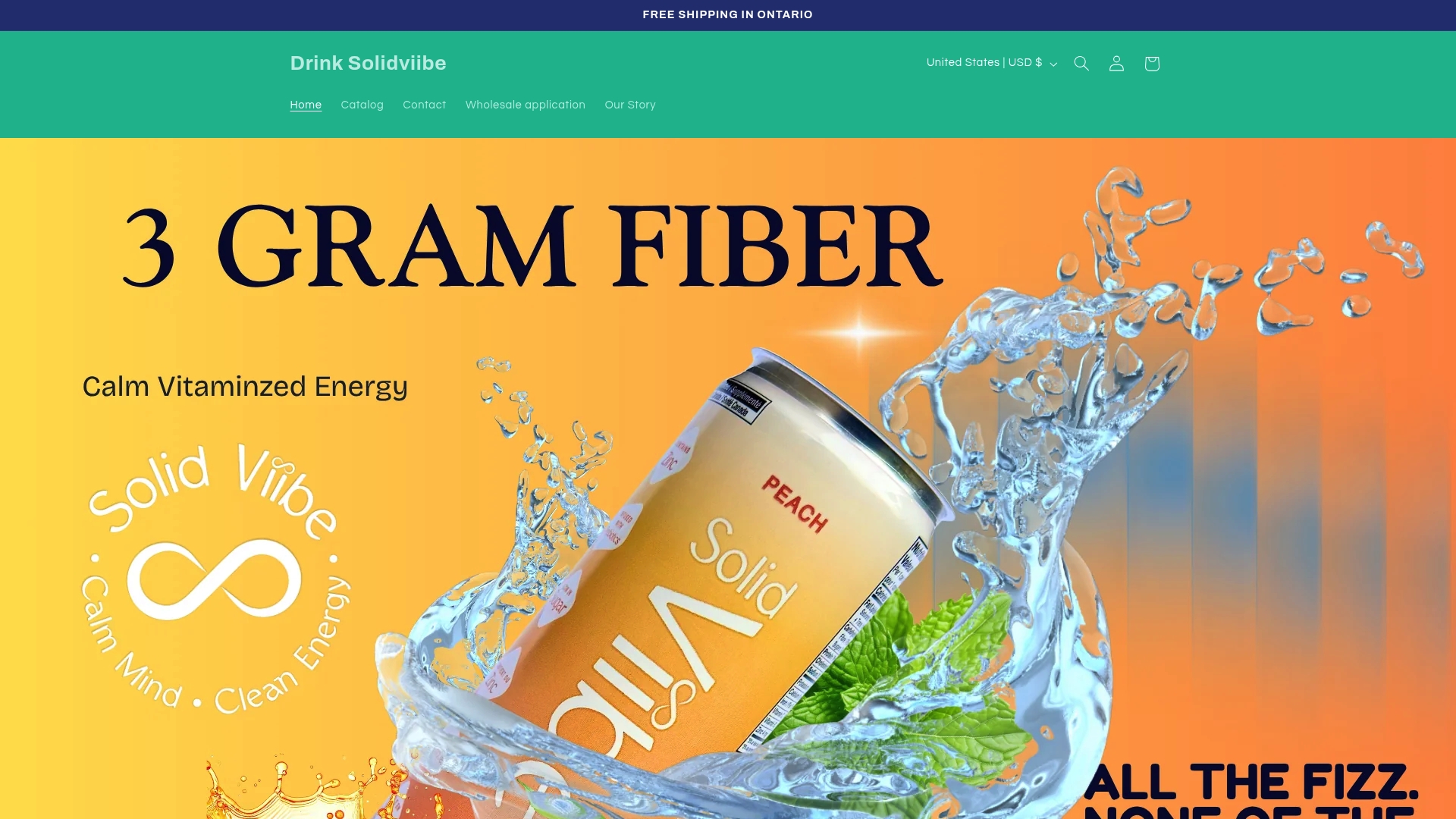
Flavours like passionfruit, lemon-ginger, and peach deliver the carbonated, flavour-forward experience that makes soda satisfying, without the 39–46 g of added sugar that comes with it. Natural ingredients, transparent labelling, and functional additions like gut-health and immunity support mean you’re getting something back from your drink, not just avoiding something bad. Available in single and variety packs for direct online order, it’s a practical swap you can have at home before your next grocery run. Visit Drinksolidviibe to browse packs and find the flavour that fits your routine.
Sources
- Rethink Your Drink | Healthy Weight and Growth | CDC
- Sugary Drinks - The Nutrition Source | Harvard T.H. Chan School of Public Health
- Added sugars on the Nutrition Facts label | FDA
- Dietary Guidelines for Americans 2020-2025
- PubMed citation: review/meta‑analysis on SSB and cardiometabolic risk
This article is general information, not a substitute for advice from a qualified doctor. Consult a qualified healthcare professional about your own circumstances before acting on anything here.


