
Role of citric acid beverages in health and hydration

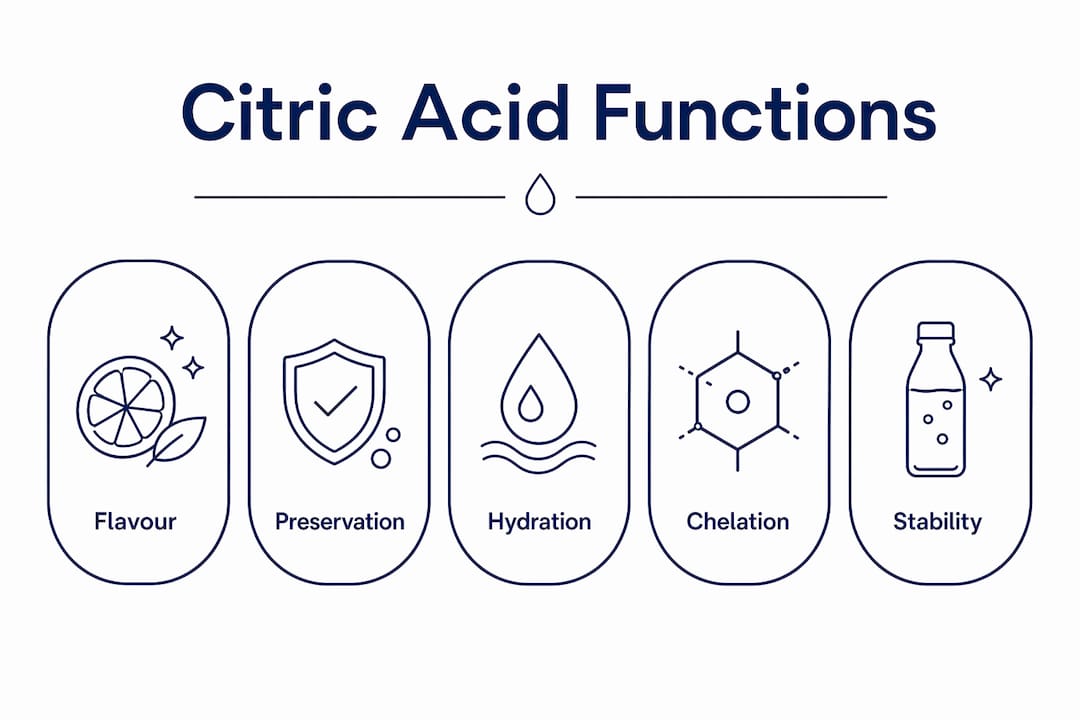
Citric acid is defined as a weak organic acid found naturally in citrus fruits and used as a multifunctional additive in beverages worldwide. The role of citric acid beverages spans four core functions: acidulant, flavour enhancer, preservative, and chelating agent. Soft drink pH is typically maintained between 2.5 and 4.0 using citric acid, which directly controls microbial safety and taste. The National Kidney Foundation recommends consuming 4 ounces of lemon or lime juice daily to raise urinary citrate and reduce kidney stone risk. Understanding these functions helps you make informed choices about the citrus beverages you drink every day.
What is the role of citric acid beverages in flavour and taste?
Citric acid delivers the sharp, tart flavour that makes citrus beverages refreshing and satisfying. Without it, drinks taste flat, overly sweet, or one-dimensional. That tartness signals freshness to your palate and keeps you reaching for another sip.
The balance of sourness and sweetness is the most technically demanding part of beverage formulation. Too little citric acid and the drink tastes cloying. Too much and it becomes harsh and off-putting. Lemon-lime sodas are the clearest example of this balance done well. Their appeal comes entirely from the precise interplay between sugar content and citric acid concentration.
Citric acid also stimulates saliva production, which primes your taste receptors and makes the overall drinking experience more vivid. This is why citrus-flavoured beverages feel more thirst-quenching than plain water for many people. That sensory response has a practical benefit: citric acid drinks improve palatability, which encourages people to drink more fluids throughout the day.
Key flavour benefits at a glance:
- Tart, bright flavour profile that signals freshness
- Counterbalances sweetness to prevent cloying taste
- Stimulates saliva and heightens taste receptor response
- Improves consumer acceptance of functional or low-sugar drinks
- Makes plain water more appealing, supporting daily hydration goals
Pro Tip: If you find sparkling citrus drinks too sharp, try chilling them to 4°C before drinking. Cold temperatures reduce perceived acidity without changing the formulation.
What preservation and stability roles does citric acid play?
Citric acid extends beverage shelf life through two distinct mechanisms: pH control and metal ion chelation. Both are critical to maintaining the safety, colour, and flavour of a drink from production to the moment you open it.
pH regulation and microbial control
Maintaining a low pH creates an environment where spoilage microorganisms cannot grow effectively. Citric acid achieves this reliably and consistently across large production batches. A stable pH also protects the integrity of other ingredients, including natural colours and added vitamins.
Chelation and oxidation prevention
Citric acid’s chelating action binds trace metals like iron and copper that enter beverages through water sources or processing equipment. These metals catalyse oxidation reactions that destroy flavour compounds and cause colour changes. By binding them before they can react, citric acid prevents the stale, off-flavour notes that shorten a product’s appeal.
| Function | Mechanism | Outcome |
|---|---|---|
| pH regulation | Lowers and stabilises beverage acidity | Inhibits microbial growth and spoilage |
| Chelation | Binds iron and copper ions | Prevents oxidation and flavour loss |
| Colour preservation | Stabilises pH-sensitive pigments | Maintains consistent visual appeal |
| Nutrient retention | Protects vitamin C from oxidative breakdown | Extends nutritional value over shelf life |
Pro Tip: When reading a beverage label, “citric acid” and “E330” refer to the same ingredient. Both indicate the same preservation and flavour function.
Proper pH management also affects packaging decisions. Beverages held at pH 3.0 or below require packaging materials that resist acid degradation over time. This is why citric acid concentration is not just a flavour decision. It shapes the entire production and distribution process.
What are the health benefits of citric acid drinks?
Citric acid beverages offer several evidence-backed health benefits, particularly for kidney health and daily hydration. These benefits are most pronounced when the drinks come from natural citrus sources, though formulated beverages also contribute meaningfully.

Kidney stone prevention
Consuming 4 ounces of lemon or lime juice daily raises urinary citrate levels, which reduces the formation of calcium oxalate kidney stones. This is a recommendation from the National Kidney Foundation, not a wellness trend. Urinary citrate binds calcium in the urine before it can crystallise into stones. For people with a history of kidney stones, citric acid beverages are a practical dietary tool.
Hydration support
Adults need 2.7 to 3.7 litres of water daily, and most fall short. Citric acid beverages close that gap by making water more appealing. The tart flavour encourages longer drinking sessions and more frequent refills. This is not a minor effect. Consistent hydration supports kidney function, skin health, digestion, and energy levels.
What citric acid beverages do not do
- Citric acid does not directly detoxify the liver or kidneys. Hydration supports organ function indirectly, but citric acid itself is not a detox agent.
- Synthetic citric acid does not contain vitamin C. Only natural citrus sources deliver antioxidant benefits alongside the acid.
- Natural citric acid from fruits provides vitamin C and antioxidants. Industrially produced citric acid provides flavour and preservation only.
- Citric acid beverages do not meaningfully boost metabolism. Claims about fat burning or metabolic acceleration are not supported by clinical evidence.
The honest picture is that citric acid beverages are genuinely useful for hydration and kidney health. They are not a cure-all, but they are a practical, enjoyable way to meet daily fluid needs.
What precautions should you know about citric acid beverages?
Citric acid beverages are safe for most people when consumed in moderation. Certain groups need to take specific precautions to avoid discomfort or long-term damage.
Dental enamel erosion
Prolonged exposure to citric acid erodes dental enamel, particularly when drinks are sipped slowly over long periods or held in the mouth. The risk increases with frequency of consumption, not just volume. Protective habits reduce this risk significantly:
- Use a straw to direct liquid away from teeth
- Rinse your mouth with plain water immediately after drinking
- Wait 30 minutes before brushing teeth after consuming acidic drinks
- Avoid sipping citrus beverages slowly over hours
Digestive sensitivities
People with gastroesophageal reflux disease (GERD), stomach ulcers, or general acid sensitivity should moderate their intake of citric acid beverages. The acidity can aggravate existing irritation and worsen symptoms. Diluting citrus drinks with water reduces the acid load without eliminating the flavour benefit.
“Individuals with dental sensitivity or acid reflux should moderate citric acid beverage consumption and use protective measures like straws and dilution.” — National Report UK
Medication interactions
Citric acid can affect the absorption of certain medications, particularly those sensitive to stomach pH. Consult a healthcare provider if you take prescription medications regularly and plan to increase your citrus beverage intake significantly.
What is the difference between natural and synthetic citric acid?
Not all citric acid in beverages comes from lemons. The source matters for nutritional value, though the functional role in preservation and flavour is largely the same.
| Feature | Natural citric acid | Synthetic citric acid |
|---|---|---|
| Source | Citrus fruits (lemons, limes, oranges) | Fermentation of sugars, typically using Aspergillus niger |
| Vitamin C content | Present alongside the acid | Absent |
| Antioxidant benefit | Yes, from fruit compounds | No |
| Primary use | Fresh juices, natural beverages | Packaged drinks, shelf-stable products |
| Consumer perception | Preferred for “clean label” products | Widely accepted but less preferred by health-focused buyers |
Natural citric acid from fruits delivers vitamin C and antioxidant compounds that synthetic versions do not. Synthetic citric acid is fermentation-derived and used primarily for its consistent concentration and cost efficiency in large-scale beverage production. Both forms perform the same pH regulation and chelation functions. The nutritional gap is the key distinction for health-focused consumers.
Drinksolidviibe uses natural ingredients and functional flavours in its sparkling beverages, which places its products closer to the natural end of this spectrum. The lemon-ginger sparkling beverage reflects this approach, combining tart citrus notes with functional ginger for both taste and wellness benefit.
Key takeaways
Citric acid is the most functionally versatile ingredient in beverages, delivering flavour, preservation, hydration support, and kidney health benefits in a single compound.
| Point | Details |
|---|---|
| Four core functions | Citric acid acts as an acidulant, flavour agent, preservative, and chelating agent in beverages. |
| Kidney stone prevention | The National Kidney Foundation recommends 4 ounces of lemon or lime juice daily to raise urinary citrate. |
| Hydration improvement | Citric acid makes water more appealing, helping adults reach their 2.7–3.7 litre daily fluid target. |
| Dental protection | Use a straw and rinse with water after drinking to reduce enamel erosion risk. |
| Natural vs. synthetic | Natural citric acid from fruit contains vitamin C; synthetic versions provide flavour and preservation only. |
Citric acid beverages and your daily hydration: my honest view
I have spent years paying attention to how people actually hydrate versus how they think they hydrate. The gap is significant. Most people know they should drink more water. Very few do it consistently without some form of flavour incentive.
Citric acid beverages fill that gap better than almost any other category. The tart, bright flavour profile is not just pleasant. It is physiologically motivating. Saliva production increases, thirst perception sharpens, and you drink more without thinking about it. That is a real, measurable benefit that plain water does not deliver for most people.
Where I think conventional wisdom gets it wrong is in treating all citric acid beverages as equivalent. A freshly squeezed lemon in sparkling water is not the same as a heavily sweetened, artificially flavoured citrus soda. The citric acid content may be similar, but the sugar load, artificial additives, and caloric impact are completely different. Health-focused consumers need to read past the “citrus” label and look at the full ingredient list.
My practical advice: prioritise beverages that use natural citrus sources, keep added sugar low, and pair your citric acid intake with plain water throughout the day. For people with dental sensitivity, the straw habit is non-negotiable. For those with GERD, dilution is the simplest fix. The benefits of citric acid beverages are real and accessible. You just need to consume them with a bit of intention.
— Sharon
Drinksolidviibe: functional sparkling beverages with balanced acidity
Health-conscious consumers who want the benefits of citric acid without the sugar load of conventional sodas have a straightforward option in Drinksolidviibe’s sparkling beverage range.

The Drinksolidviibe variety pack includes lemon-ginger, peach, and passionfruit flavours, each formulated with natural ingredients and balanced acidity. The lemon-ginger option delivers the tart citrus profile that supports hydration goals, paired with functional ginger for an added wellness dimension. These beverages are designed for people who want refreshment and real ingredients in the same can. Drinksolidviibe makes it easy to meet your daily fluid needs without reaching for a sugary soda.
FAQ
What does citric acid do in beverages?
Citric acid adjusts pH, enhances tart flavour, inhibits microbial spoilage, and chelates trace metals to prevent oxidation. These four functions make it the most widely used acidulant in the beverage industry.
Are citric acid beverages healthy?
Citric acid beverages support hydration and kidney stone prevention when consumed in moderation. Natural citrus sources also provide vitamin C, while synthetic citric acid delivers flavour and preservation without added nutritional value.
Can citric acid drinks damage your teeth?
Prolonged exposure to citric acid erodes dental enamel, particularly with slow sipping. Using a straw and rinsing with plain water after drinking significantly reduces this risk.
What is the difference between natural and synthetic citric acid?
Natural citric acid comes from citrus fruits and contains vitamin C and antioxidants. Synthetic citric acid is produced through sugar fermentation and provides flavour and preservation without those nutritional compounds.
How much citric acid should you consume daily?
The National Kidney Foundation recommends 4 ounces of lemon or lime juice daily to raise urinary citrate levels for kidney stone prevention. General moderation applies for overall health, particularly for people with dental sensitivity or acid reflux.
Recommended
- Solidviibe Sparkling Beverage Variety Pack - 12 Cans (Lemon-Ginger, Pe – Drink Solidviibe
- Solidviibe Lemon Ginger — Functional Sparkling Beverage – Drink Solidviibe
- Solidviibe Peach — Functional Sparkling Beverage – Drink Solidviibe
- Solidviibe Passionfruit — Functional Sparkling Beverage – Drink Solidviibe


